
Don't Miss These Spring Songbirds
/While experienced birders get excited about all sorts of gray-coated, similar-sounding, hard-to-identify birds — the avian equivalent of deep tracks — other people might prefer to focus on the greatest hits.
For those bird lovers, it’s time to look to the trees and the sky, where the birds of spring are putting on a show.
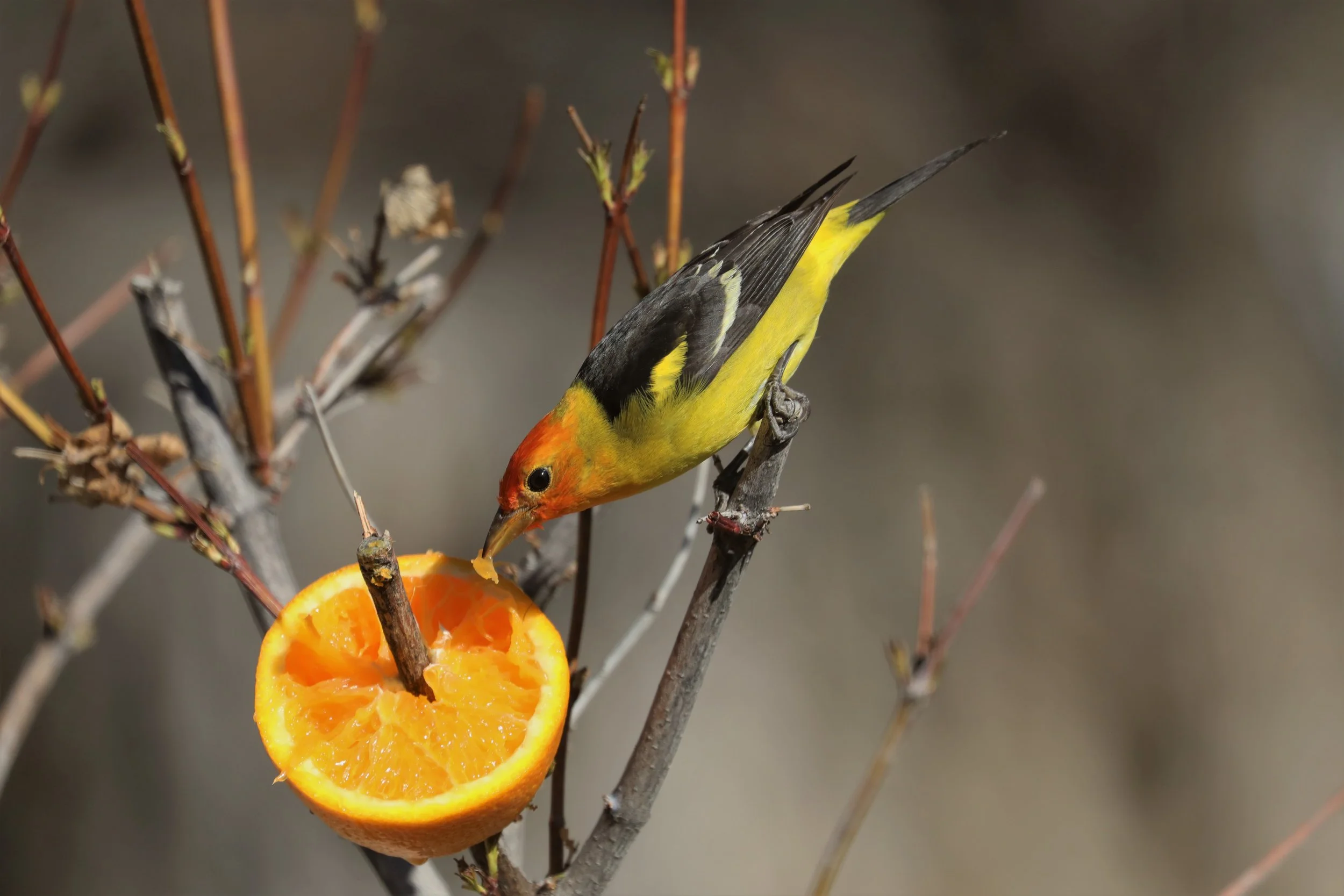
Western Tanagers
These beauties are common from the last week in April to September, but they're easiest to see from May to mid-July, when they’re courting and feeding their chicks.
Local birder Chuck Gates (whose gorgeous photos are shown here) says that from late April to early May, you can coax them into wooded yards by setting out orange halves and other fresh fruit.
In the wild, the birds spread out across open forests at sites including Shevlin Park, Suttle Lake, Camp Sherman and the trail at Sunriver Nature Center.
Western Meadowlarks
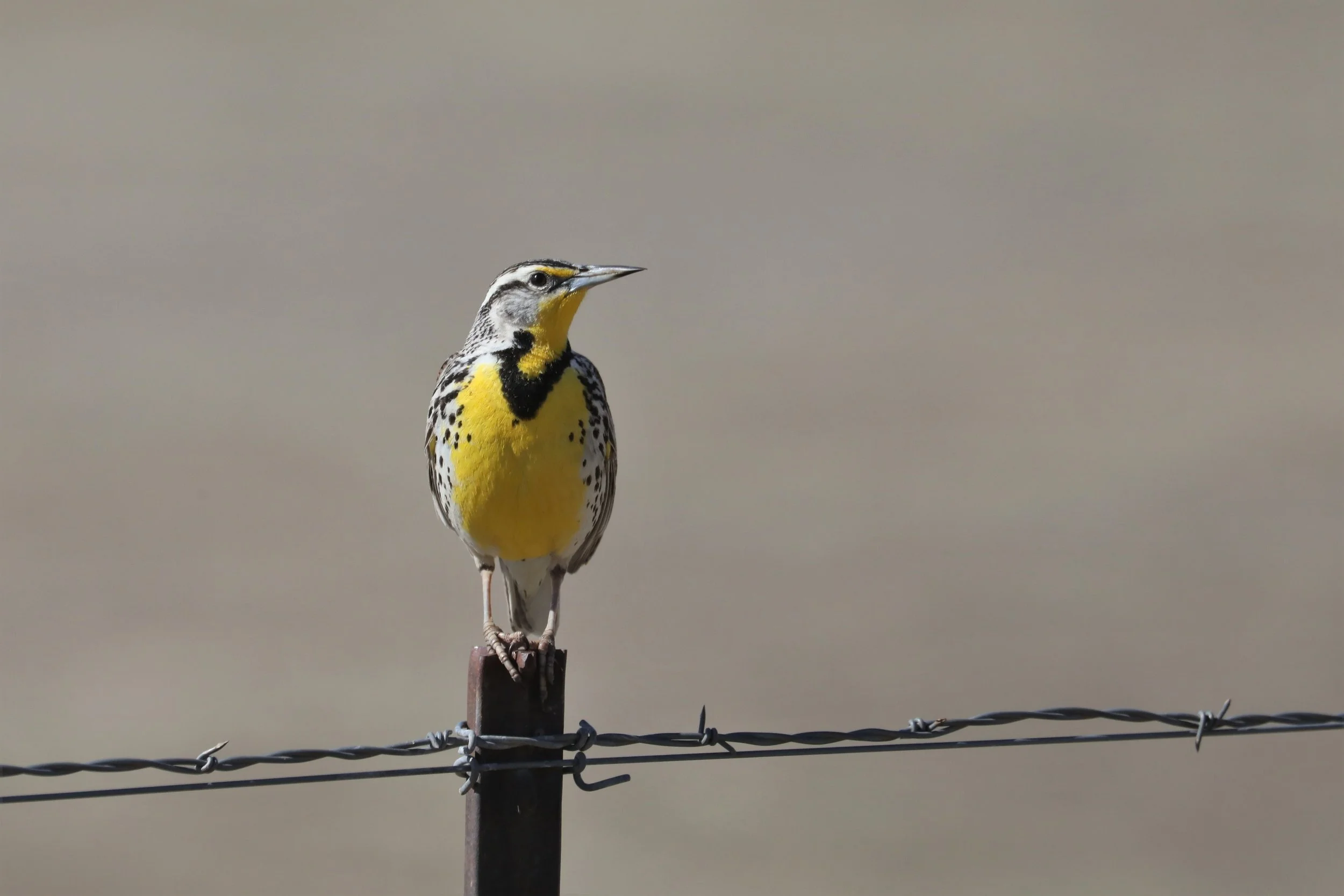
The best time to see and hear our handsome state bird is between April and July. That’s when males don their brightest yellow plumage and start belting out songs and displaying to attract females.
Affectionately nicknamed thunderchunks for their boisterous singing and husky bodies, meadowlarks prefer to blast their songs across arid and open areas.
Listen for them at the Oregon Badlands Wilderness east of Bend and at the Crooked River National Grasslands between Madras and Terrebonne. They also perch on power lines east of Horse Ridge and north along Highway 27, and from Knott Landfill east.
Bullock’s Orioles
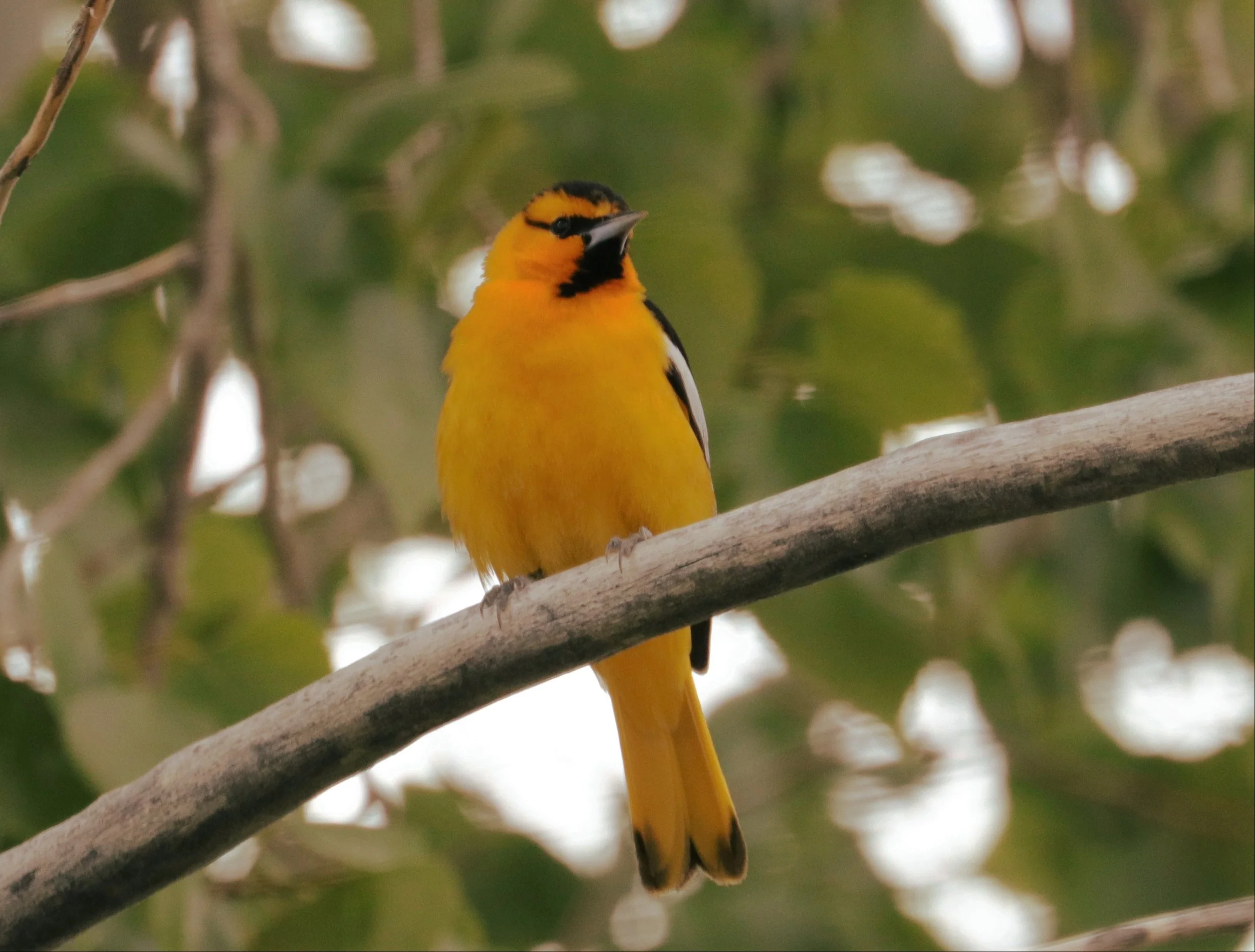
Tired of all those golden beauties? Bullock's Orioles, the orangest of our migratory birds, arrive the first week of May and stay through late August.
These orioles are not easy to find in Bend, but you can sometimes spot their telltale flash of orange and pendulous, sock-like nests at the Ryan Ranch meadow near Dillon Falls.
Outside Bend, these birds can be found at any pond or small lake with large deciduous trees, including at Smith Rock State Park, Lake Billy Chinook State Park, the Museum at Warm Springs, North Shore Road east of Prineville Reservoir and Haystack Reservoir.
Lazuli Buntings
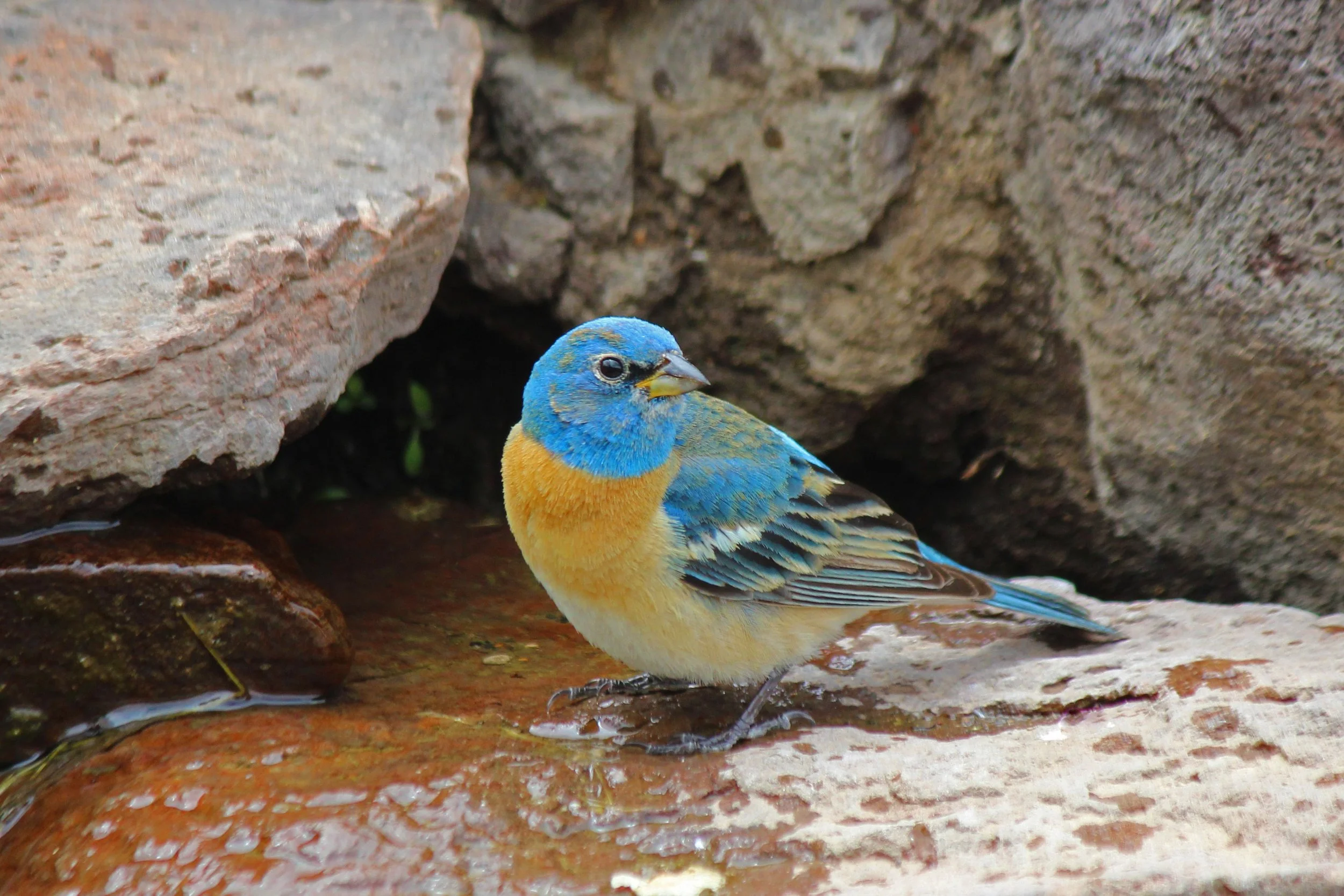
Gates, who wrote the Guide to Common Birds of the Deschutes Canyon Area, claims Lazuli Buntings are the single most beautiful of all the birds in Central Oregon. If you disagree, write to Chuck.
By far the most likely place to find the beauties is at Smith Rock State Park. Since lazulis like to hide out in dense vegetation formed by year-round seeps and springs, walk along the rimrock in May and June scanning for places where water trickles out of the canyon walls.
If you don’t mind hiking into a canyon, and more importantly out of a canyon, the Alder Springs Trail is another likely location for these blue beauties, as well as Trout Creek Swamp in Sisters.
Warblers
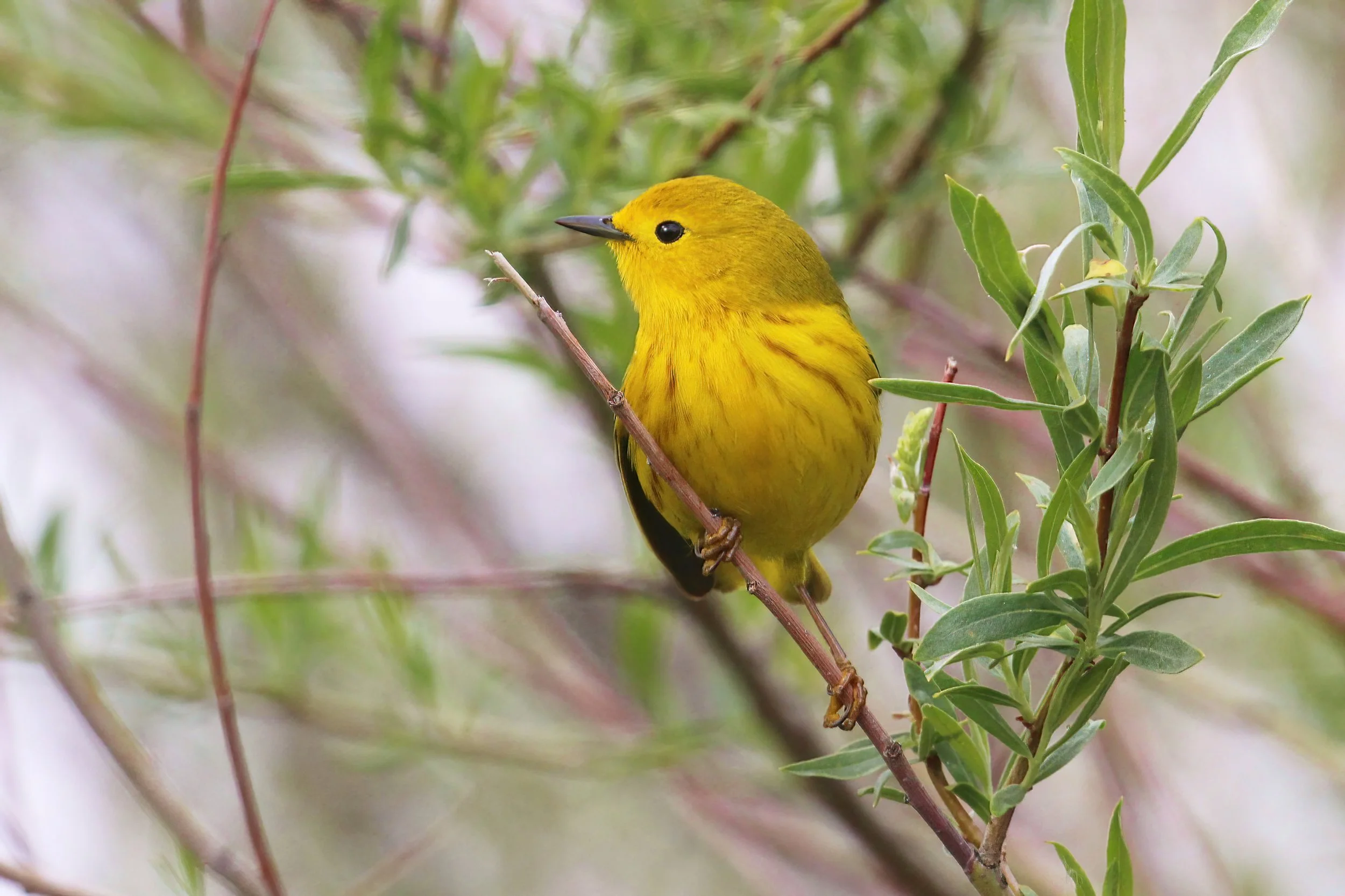
Any discussion of colorful migratory birds wouldn’t be complete without mentioning warblers. We aren’t blessed with the diversity and density found in some other states, but that just makes the ones we do see all the more special.
Most common species — including Yellow Warblers (shown here), Yellow-rumped Warblers and Wilson’s Warblers — arrive in April and stay until September or October. Most are primarily yellow, a helpful trait since they hide out in willows and other leafy streamside vegetation.
To spot these little birds, watch for flashes of gold and listen for their short, sweet songs as you walk along the Deschutes and other area rivers. They’re also found at reservoirs, bike trails in Sunriver, and wooded areas in Sisters such as Camp Polk Meadow.
Learn More
The best way to learn about warblers and all the other pretty migratory birds of Central Oregon is to join one of many outings led by local experts. Gates, who has birded nearly every day for the past 40 years, leads a beginner-friendly walk at the Crooked River Wetlands every first and third Saturday from April through September.
From March until early June, a 90-minute birding-by-ear walk (no Merlin app required) begins at the Sawyer Park parking lot every Tuesday at 8 a.m.
For a longer day with birders from East Cascades Bird Alliance, join the Wednesday Birders for their weekly field trip to local hotspots.