
Leaf Blower Season Has Arrived
/It’s leaf blower season in Central Oregon, when we wake to the loud, high-pitched VRRR, VRRR, VRRRRR noise that signals the arrival of the end of snow blowing season.
Rachel Carson famously fretted that one day we’d find ourselves in a silent spring devoid of birdsong, but she needn’t have worried. The whine of leaf blowers ensures that our springs will never be quiet.
Are the birds still singing? VRRR, VRRR, VRRRRR. We have no idea.
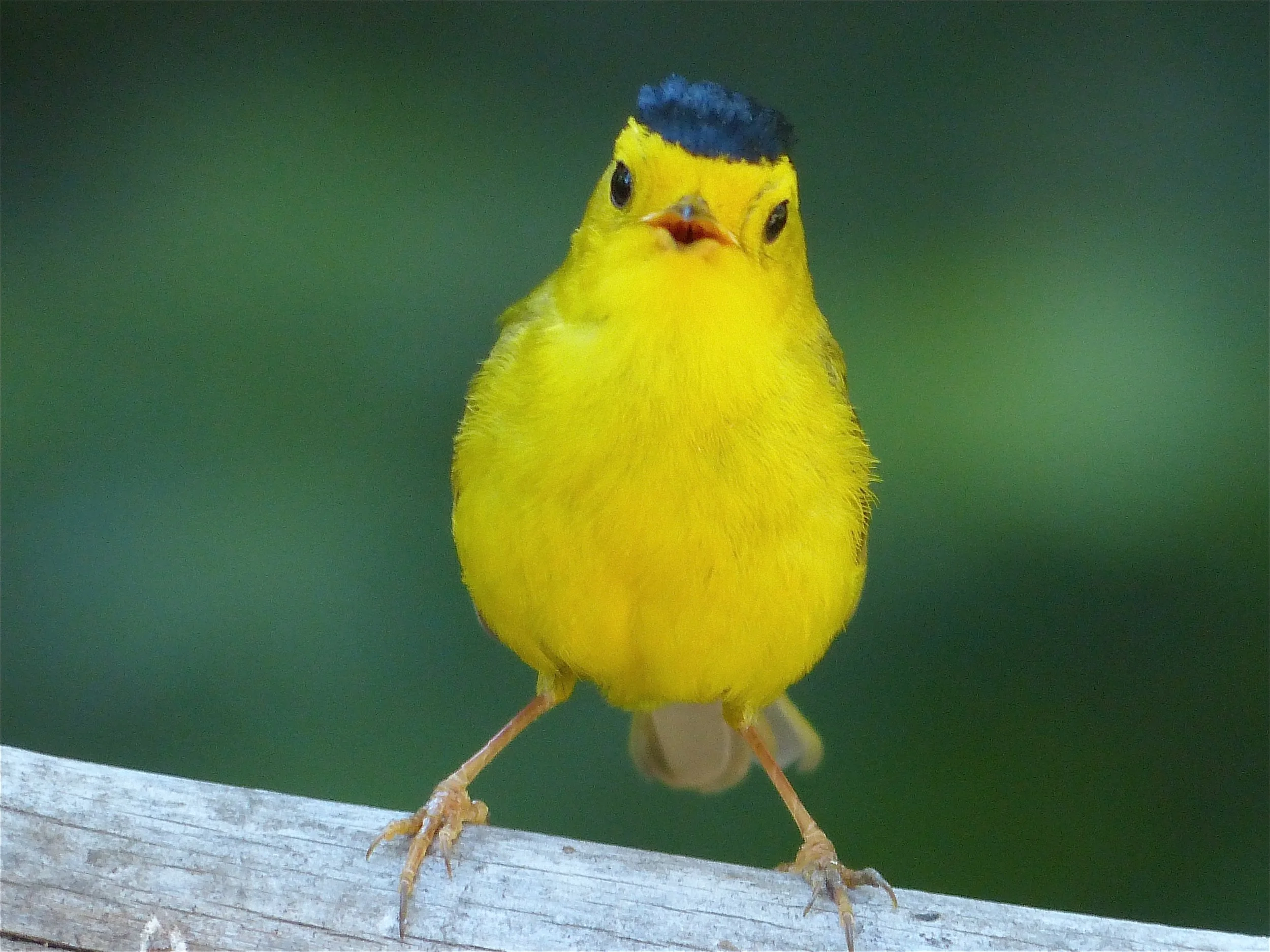
Are Wilson’s Warblers making noise this spring? not sure, but the leaf blowers sure are. Photo: Mark Lundgren
Few people realize that leaf blowers stirred up the Dust Bowl in the 1930s. It began, like so many good ideas, with Texans. They were so tired of the leaves stacking up in their state that they started blowing them from Over Here to Over There. Only the wind — that great leaf blower in the sky — would blow the leaves right back Over Here.
Like good socialists, the Texans finally got together, forming giant posses of cowboys who used leaf blowers to send all the debris in one direction: north to Oklahoma.
The Sooners were none too happy about that, so they formed a battle line stretching east to west across their state, like a bunch of brothers peeing in a ditch, and blew the leaves back down at Texas. Pretty soon, Colorado and New Mexico jumped in, and you had folks all across the Great Plains blowing leaves and needles and dust every which way.
This went on for years, until millions of people, weary from dust pneumonia and leaf blower blisters, migrated to safety in California. Fast-forward a few decades, and those same people migrated again, straight up into Northwest Crossing. It’s the real history of the West.
Now in truth, leaf blowers weren’t invented until the 1950s. Before that, leaves and needles simply piled up, willy-nilly, as untended and unsupervised as Gen X. There was debris everywhere — parking lots, streets, parks, backyards, tennis courts, sidewalks. It was terrifying, the piles.
Maybe you’ve heard of people suffering from piles? Yep, that’s what they’re talking about.
If only folks back then had come up with a primitive tool of some sort to manage the problem — say, a long stick with bristles on the end that one could push in a repetitive manner, thus displacing unwanted leaves and needles.
Or maybe instead of pushing, they could’ve invented a device for pulling debris toward the body in a forceful manner. Again, a long stick, and at the end of that, a fork. Yes, a giant, downward-facing fork that might in its tines collect small items.
Alas, no such cheap, lasting, silent, calorie-burning devices were ever invented. We have, in their place, leaf blowers that cost $40, if you want one that lasts two months.
Or, for over $700, you can buy a leaf blower that offers cruise control (really), generates wind speeds of 270 miles per hour (yep), and in one hour emits as much air pollution as a car traveling 1,000 miles (true story).
In the modern world, there are still a few people, sensitive to both noise and air pollution, who either leave the leaves where they fall or gather them up manually.
The problem with the manual method is that it can be challenging for busy people, the elderly, and disabled folks. In the old days, they’d just ask their own children, or those of their neighbors, for help.
The problem, as you may have noticed, is that kids these days are not available or easy to talk with. Populations are down because leaf blowers, and those damned windmills, have blown some kids into other states. Stouter children are reportedly still here, and some even try to go outdoors, only to be blown back inside.
If you are lucky enough to spot a young person in Bend who might be able to help out with your leaves and needles, speak loudly and quickly: “I was wondering if you’d be willing to rake my” — VRRR, VRRR, VRRRRR.